This exhibition is an act of storytelling. It is built upon the journeys undertaken by artists as they sought to make sense of the shifting social conditions in and beyond Singapore since the 19th century through art. These stories, told through different perspectives, offer us ways to relook at how Singapore’s art history has been written and what has been left out.
The exhibition acknowledges our diverse and cosmopolitan identities. We explore how artists considered questions of aesthetics and engaged with broader social and national concerns like colonialism, urban change and globalisation–forging alternate pathways and strategies in both medium and expression. It embraces an expanded view of Singapore’s art, offering entry points to explore issues of gender, class and labour, and touching on other disciplines and visual cultures.
We begin with images of Singapore during the context of British colonialism in Malaya. Emerging from this period, artistic communities formed during the 1930s to 1950s provided the space for artists to exchange ideas and grapple with questions about the role of art in Singapore.
After Singapore’s independence in 1965, rapid socioeconomic and technological changes fuelled the growth of fine art education and commercial design. During this time, artists moved between figurative expression and abstraction and experimented with a wide range of mediums and conceptual approaches.
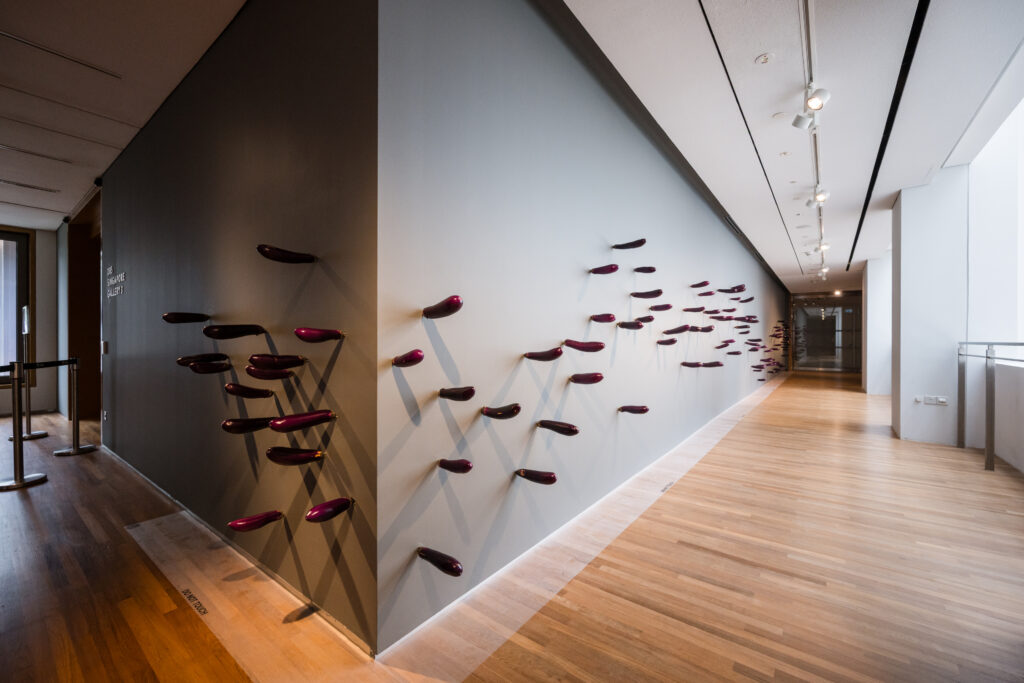
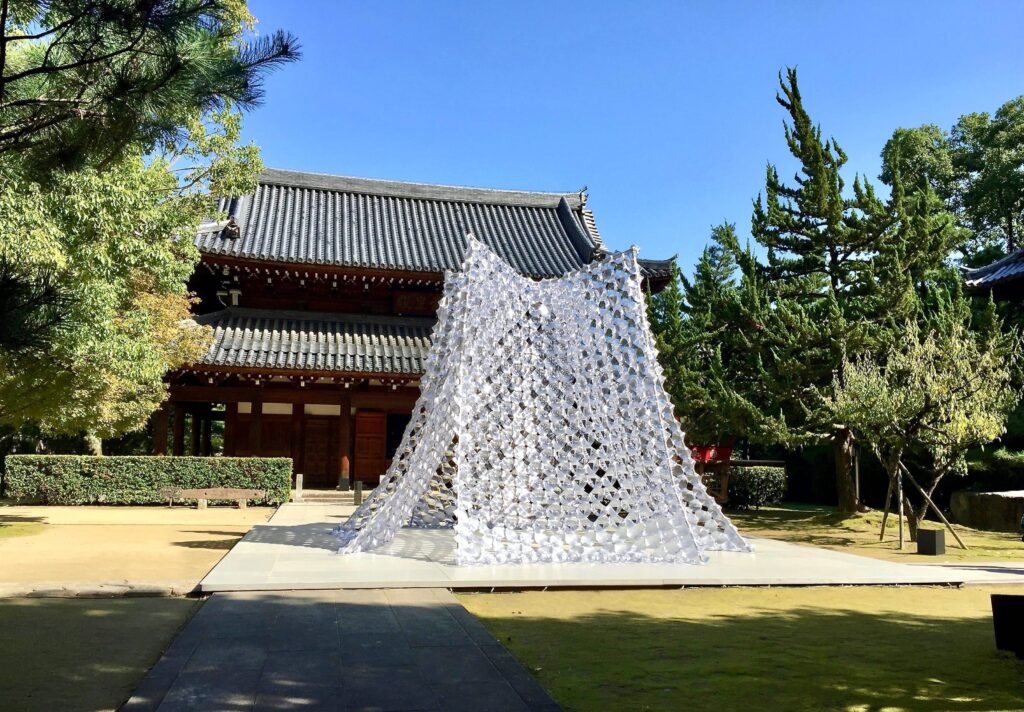
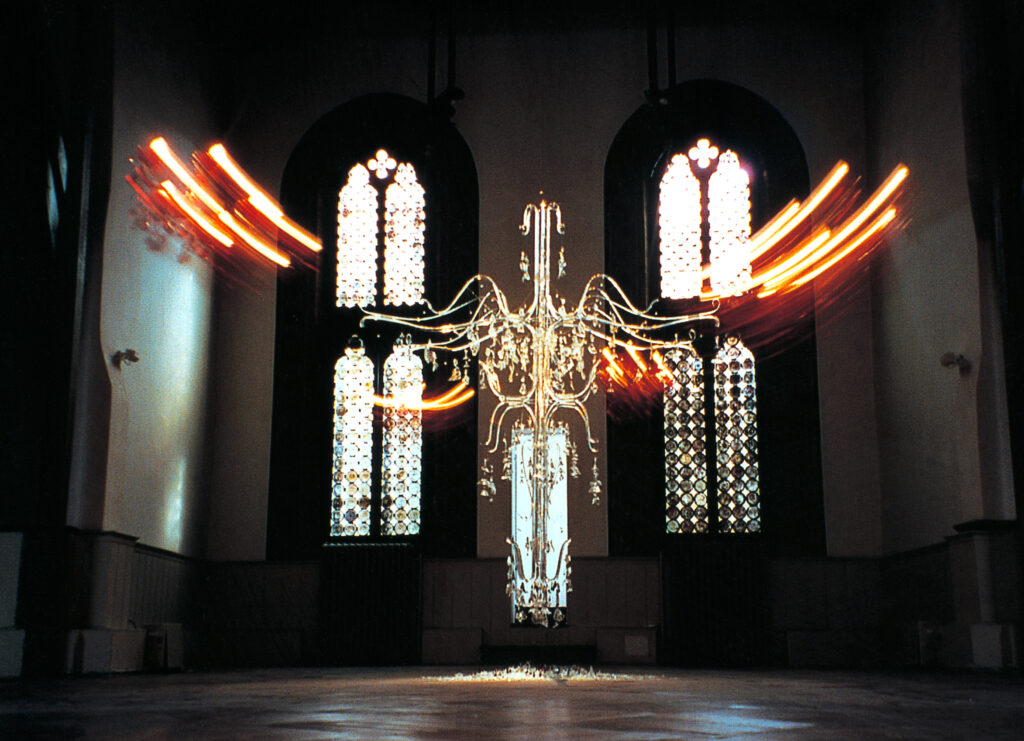
From the 1980s, artists redefined methods of display and art making through installation, performance, and video. By bringing art into public spaces and forming independent platforms, they challenged conventions about where, when and how art could be experienced. No matter the period, artists have consistently initiated and inspired new ways of thinking about and making art.
Visit the exhibition page